May 13, 2026
Terracotta Bricks vs Clay Bricks: What Specifiers Actually Need to Know
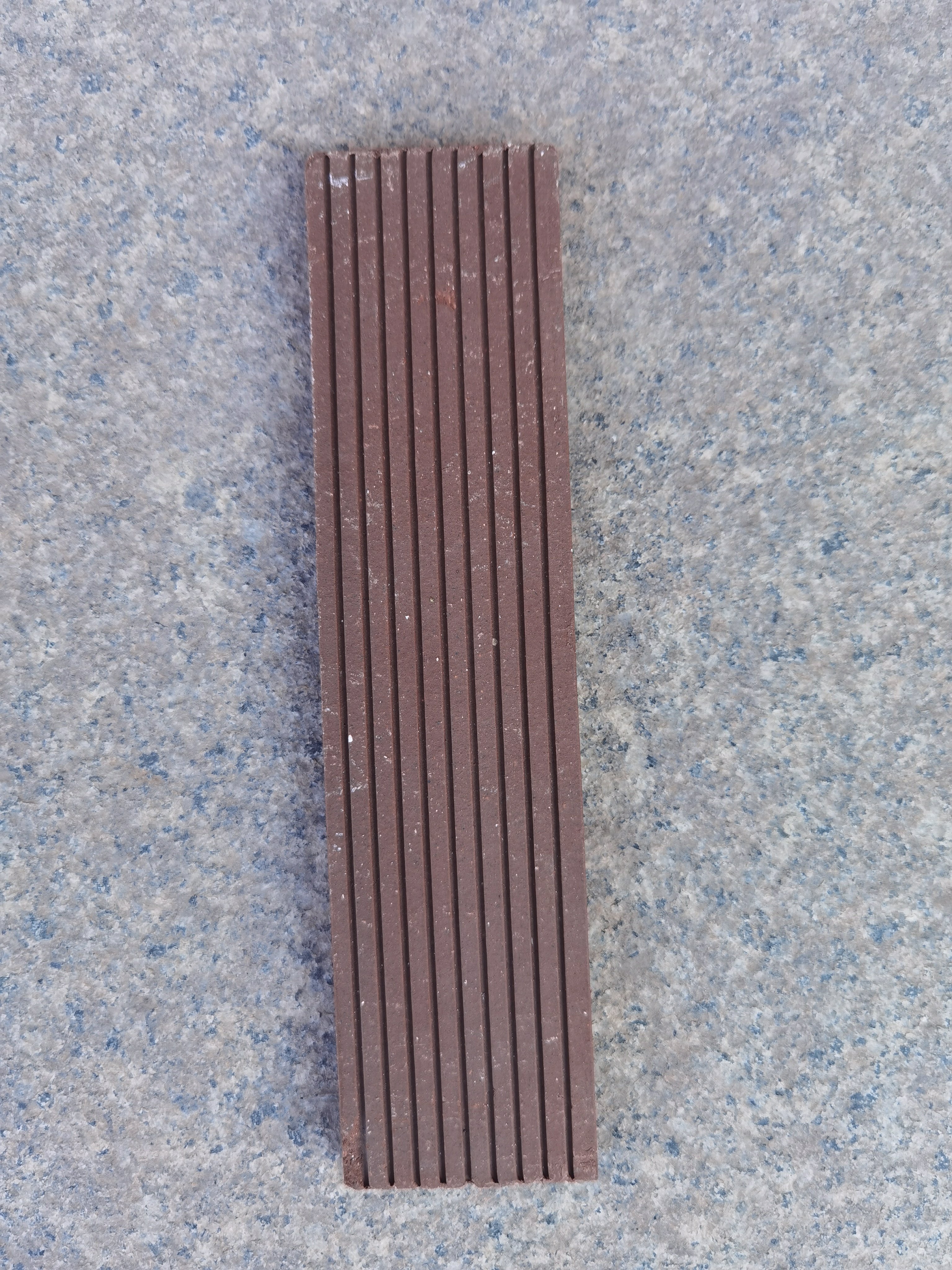
If you‘ve spent any time sourcing masonry materials across international supply chains, you’ve probably fielded this question from a junior architect or a client‘s procurement team: “Aren’t terracotta bricks and clay bricks basically the same thing?”
They’re not wrong in a geological sense. But in procurement and specification, treating them as interchangeable is a fast track to budget overruns, performance failures, or both.
Here’s the core distinction that actually matters for B2B buyers: terracotta is a subset of fired clay products characterized by higher-grade raw material selection, finer particle refinement, and typically higher firing temperatures—which translates to a different set of mechanical properties, different supply chain dynamics, and a fundamentally different cost-per-square-meter equation.
This article unpacks the technical friction points between these two material categories, with particular attention to ASTM and EN compliance pathways, supply chain considerations, and the hidden cost drivers that line items in a spec sheet won‘t show you.
Table of Contents
Terminology That Trips People Up
Raw Materials: What’s Actually Going Into the Kiln
Manufacturing Tolerances and Quality Control Variance
Performance: Reading ASTM and EN Test Data Properly
Procurement Logic: Lead Times, MOQs, and Regional Sourcing
Cost Structure: Why Unit Price Tells Half the Story
Applications: Where Each Material Wins
FAQ
The Bottom Line
Terminology That Trips People Up
Let’s clear this up immediately. The word “terracotta” comes from Italian terra cotta, literally “baked earth.” This etymological origin is charming but entirely unhelpful for procurement—because technically, all fired clay bricks are “baked earth.”
In contemporary construction language, however, terracotta refers specifically to fired clay products manufactured from higher-quality clay deposits with controlled mineral composition, often incorporating kaolinite-rich clays and subjected to more rigorous refinement processes than commodity clay bricks. Architectural terracotta may be unglazed, slip-glazed, or fully glazed, and is frequently used in non-structural or semi-structural applications as a cladding material.
Clay bricks, by contrast, encompass a much broader category. They are manufactured from commonly occurring clays or shales, with far less stringent requirements for mineral purity or particle size distribution. The BDA defines clay masonry units under BS EN 771-1, which classifies them into LD (low density, ≤1000 kg/m³) and HD (high density, >1000 kg/m³) categories based on their intended exposure and structural role.
So no, they‘re not the same thing. And the difference isn’t academic—it shows up in your compressive strength test reports, your water absorption metrics, and your total installed cost.
Raw Materials: What‘s Actually Going Into the Kiln
This is where the technical divergence starts. Terracotta production favors clays with specific mineralogical profiles—typically sedimentary clays rich in kaolinite and montmorillonite, with iron oxide content that produces that characteristic red-brown hue when fired in an oxygen-rich kiln atmosphere.
Clay brick manufacturing is more opportunistic. Producers work with locally available clays or shales of highly variable composition, keeping transportation costs low. The typical raw material blend for structural clay products contains 35-55% clays or argillaceous shales, 25-45% quartz (as filler for strength), and 25-55% feldspar (as a fluxing agent to lower melting temperatures). Local clay deposits are used with minimal beneficiation—little crushing, grinding, or purification.
The practical implication for B2B buyers? Terracotta offers tighter batch-to-batch color consistency and more predictable mechanical properties. Clay brick, particularly from smaller regional producers, can exhibit meaningful variance in both color and strength across production runs. If your project requires uniformity across 50,000 units, that variance matters.
Manufacturing Tolerances and Quality Control Variance
Both materials are fired in kilns, but the process parameters differ. Structural clay products are typically fired at temperatures in the range of 1,050°C to 1,100°C (approximately 1,925°F to 2,000°F). At these temperatures, the clay or shale impurities melt sufficiently to form a glassy bond, but the coarser filler particles remain largely unaffected.
Terracotta production often employs higher firing temperatures and longer dwell times. The material may incorporate grog—bits of previously fired clay—to control shrinkage and provide structural integrity to the fine clay matrix. This additional processing step adds cost but reduces dimensional variability.
For buyers, the takeaway is this: verify the quality control regime. Reputable clay brick manufacturers conduct post-firing tests including water absorption, compressive strength, dimensional accuracy to BS EN 771-1, freeze-thaw cycling, and efflorescence evaluation. Terracotta suppliers should provide comparable documentation—if they don‘t, ask why.
Performance: Reading ASTM and EN Test Data Properly
This section is where procurement decisions get made or broken. Let’s walk through the key metrics side by side.
Compressive Strength
Under ASTM C216 (Standard Specification for Facing Brick), the minimum compressive strength requirement is 2,500 PSI (approximately 17.2 MPa). This is the floor—the bare minimum for compliance. In practice, the National Brick Research Center (NBRC) at Clemson University reports that the average compression strength for fired facing brick tested is around 14,500 PSI (approximately 100 MPa) , far exceeding ASTM minimums.
Terracotta compressive strength varies by formulation and firing regime. Published technical specifications for architectural terracotta tested to ASTM C67 indicate values exceeding 8,000 PSI (55 MPa). High-end terracotta facade systems can reach 15 MPa to 19.5 MPa, depending on density and hollow-core geometry.
Water Absorption and Saturation Coefficient
This is perhaps the most overlooked metric in material selection—and one of the most consequential for long-term performance. ASTM C67 test methods cover absorption, saturation coefficient, and freeze-thaw effects.
For clay brick, acceptable IRA values typically range from 10 to 30 grams per minute per 30 square inches of bed area. Units with field IRA exceeding 0.0016 g/min/mm² should be thoroughly wetted three to 24 hours before installation, per ASTM C216 recommendations, to prevent the brick from pulling water too rapidly from mortar and compromising bond strength.
Terracotta water absorption values, when tested to ASTM C67, typically fall below 7.9% for 24-hour soak tests and under 11.9% for 5-hour boil tests, with saturation coefficients under 0.69. This lower porosity contributes to superior freeze-thaw resistance—a critical consideration for projects in northern climates.
Thermal and Fire Performance
Both materials offer excellent fire resistance. Terracotta has documented fireproofing applications, including use as casing for steel columns and beams. Clay bricks consistently achieve Class A1 fire ratings when tested to BS EN 13501-1.
Thermal performance is application-dependent. Terracotta rainscreen facade systems prevent thermal bridging, resist moisture and humidity, and reduce thermal movement of the underlying structure.
Procurement Logic: Lead Times, MOQs, and Regional Sourcing
Here’s where the conversation shifts from engineering to supply chain. Global clay brick production is heavily concentrated in China and Vietnam, where industrial zones enable cost-effective, scalable output with relatively short lead times for standard formats.
Terracotta, particularly architectural-grade material for rainscreen and cladding applications, operates on a different supply model. Production is more specialized, with fewer qualified manufacturers globally. Minimum order quantities tend to be higher, and lead times longer—often 8-16 weeks for custom profiles versus 4-6 weeks for standard clay brick. Pre-manufactured terracotta assemblies, while reducing on-site labor, can be expensive and time-consuming to produce.
Regional sourcing considerations also diverge. Clay brick production is often localized to minimize freight costs on heavy, low-margin material. Terracotta, with its higher unit value, can economically justify longer shipping distances—which opens up international sourcing options but also introduces import logistics complexity.
Cost Structure: Why Unit Price Tells Half the Story
If you‘re comparing these materials solely on per-unit or per-square-meter material cost, you’re missing the larger financial picture. Let‘s break down the actual cost drivers.
Material Cost Benchmarks:
Clay bricks typically range from $0.40 to $1.50 per unit, depending on grade, region, and volume.
Terracotta bricks or facing tiles range from $0.80 to $2.50 per unit for comparable formats.
But per-unit pricing is misleading because the units themselves differ. Terracotta is frequently supplied as larger-format cladding panels or hollow tiles, not modular bricks. For rainscreen facade applications, terracotta pricing starts around $90 per square meter for basic profiles, with variations based on thickness and surface complexity. Terracotta panel systems typically weigh 35-45 kg per square meter, which has downstream implications for structural support requirements.
Installation Cost Variables:
Clay brick installation labor is well-understood and competitively priced in most markets.
Terracotta rainscreen installation requires specialized subcontractors. Labor costs vary significantly by region, but installation alone can add $5 to $13 per square foot in North American markets.
Lifecycle Cost Considerations:
NIST assigns clay brick a 100-year service life—more than twice the lifespan of many alternative cladding materials. Terracotta, when properly maintained, can last over 100 years as well, according to NIST data. Terracotta facade systems, despite higher initial investment, can deliver superior lifecycle value through reduced maintenance and replacement costs.
Cost Component | Clay Brick | Terracotta |
Material (per unit) | $0.40 – $1.50 | $0.80 – $2.50 |
Material (cladding, per m²) | N/A (modular format) | $90+ (starting) |
Installation Complexity | Low/Standard | Moderate/High |
Freight Cost Sensitivity | High (low value density) | Moderate (higher value density) |
Lifecycle (years) | 100 (NIST) | 100+ (NIST) |
Maintenance | Low | Moderate (sealing may be required) |
Applications: Where Each Material Wins
Clay brick remains the workhorse for load-bearing masonry, cavity wall construction, and projects where cost predictability and contractor familiarity are paramount. It‘s the default choice for residential construction, commercial infill, and institutional buildings that don’t require architectural distinction.
Terracotta dominates in rainscreen cladding applications, ventilated facade systems, and projects where architectural expression and long-term low maintenance justify the premium. Terracotta can be used alongside brick for ornamental areas—if the clay source is the same, they can harmonize; if different, they can contrast. Glazed terracotta offers enhanced resistance to weathering, frost, and ultraviolet light.
The material selection matrix ultimately hinges on three variables: budget flexibility, performance requirements (particularly freeze-thaw exposure), and architectural intent. Neither material is universally superior—they solve different problems at different price points.
FAQ
Q: Are terracotta bricks a subset of clay bricks or a distinct category?
Technically, terracotta is a subset of fired clay products. The distinction is practical: terracotta implies higher-grade raw materials, finer particle refinement, and different manufacturing tolerances. In specifications, they are treated separately.
Q: Which material performs better in freeze-thaw climates?
Terracotta generally exhibits lower water absorption and lower saturation coefficients, which translates to superior freeze-thaw resistance. Clay brick can perform adequately in these conditions if specified as Grade SW (severe weathering) under ASTM C216, but requires proper installation detailing.
Q: What standards should I reference in procurement documents?
For North American projects: ASTM C216 for clay facing brick, ASTM C67 for test methods. For European projects: BS EN 771-1 for clay masonry units. Request compliance documentation for both.
Q: Are there sustainability advantages to either material?
Both materials are made from natural clay and are fully recyclable. Some terracotta products claim up to 49% total carbon lifetime savings per tonne versus typical clay facing brick equivalents. Verify specific environmental product declarations (EPDs) with manufacturers—claims vary significantly by production location and energy source.
Q: Can I use terracotta for structural applications?
Terracotta can be used in semi-structural or structural capacities depending on the specific product and engineering approval. However, most architectural terracotta is designed for cladding applications, not primary load-bearing. Consult structural engineering documentation for your specific application.
The Bottom Line
Terracotta and clay brick occupy different positions in the building materials ecosystem. Clay brick is th
Related articles
May 13, 2026
Terracotta Bricks vs Clay Bricks: What Specifiers Actually Need to Know
Read more →May 13, 2026
How to Choose Exterior Terracotta Bricks for Your Project
Read more →May 13, 2026
B2B PROCUREMENT GUIDE · FACADE MATERIALS
Read more →May 13, 2026
Are Clay Bricks Waterproof or Water-Resistant?
Read more →