July 14, 2026
Terracotta Facade Tiles vs. Fiber Cement Cladding: A Comparative B2B Guide
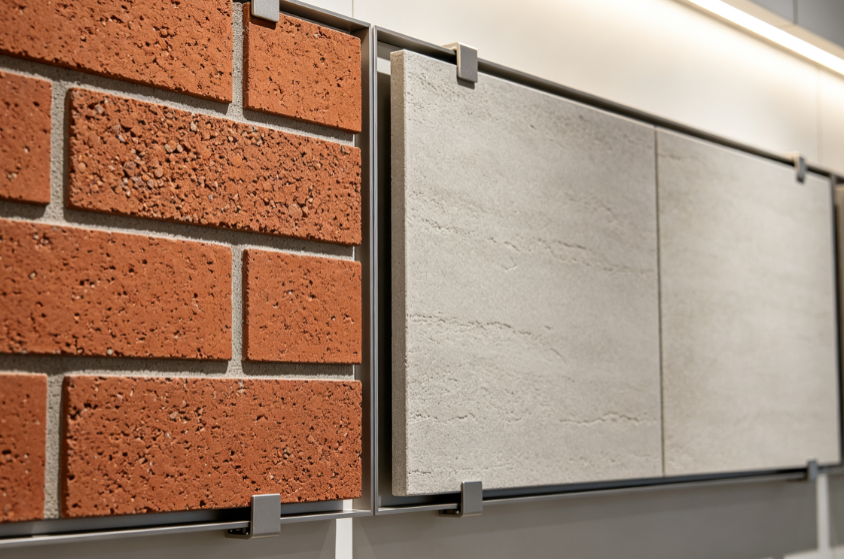
Introduction
When it comes to exterior cladding, the choice between terracotta and fiber cement is one of the most consequential decisions an architect or specifier can make. Both materials serve the same fundamental purpose—protecting the building envelope while providing aesthetic expression—but they achieve this through fundamentally different means.
Terracotta is a fired-clay ceramic with a heritage stretching back millennia. Fiber cement is an engineered composite that emerged in the late 20th century as a durable alternative to wood siding. The differences between them extend far beyond appearance, touching on fire safety, durability, installation complexity, lifecycle cost, and environmental impact.
This guide provides a comprehensive technical comparison of terracotta facade tiles and fiber cement cladding, helping you make an informed decision for your next project.
What Is Terracotta Facade Cladding?
Terracotta—literally "baked earth" in Italian—is made from natural clay that is shaped and fired in industrial kilns at temperatures often exceeding 1,200°C. This vitrification process creates a dense, ceramic material with exceptional durability and weather resistance. Colors can be achieved through natural clay pigments, glazes applied before firing, or through the firing process itself, which vitrifies color into the clay—meaning the color will not fade for the life of the building.
Key characteristics:
A1 non-combustible classification—the highest fire safety rating available
Service life exceeding 50 years, with some products designed for 100+ years
Weight of 28–35 kg/m² (for lightweight systems)
100% recyclable at end of life
No long-term maintenance required
Available in a wide range of colors, textures, and profiles, with custom options possible
Modern terracotta facade systems use advanced manufacturing processes like sinter kiln firing to achieve precise tolerances and consistent quality. The interlocking profile design with vertical aluminum retaining systems creates a "mount and done" installation process that reduces on-site labor.
What Is Fiber Cement Cladding?
Fiber cement is a composite material made from a mixture of cement, cellulose fibers, water, and air. The raw materials—typically around 60% cement, 4% fibers, 6% water, and 30% air—are mixed and formed into panels through a specialized manufacturing process. The result is a dense, durable material that combines the strength of cement with the flexibility of fiber reinforcement.
Key characteristics:
A1 or A2 non-combustible ratings available depending on formulation
Service life of 50+ years with proper maintenance
Weight of approximately 1,600 kg/m³ density
Requires periodic repainting (typically every 8–12 years)
Available in 8, 10, or 12 mm thicknesses
Through-colored options available for consistent appearance
Fiber cement is valued for its cost-effectiveness and versatility. It can mimic the appearance of wood, stone, or other materials while offering superior durability and fire resistance compared to traditional alternatives.
Head-to-Head Comparison
1. Fire Safety
Terracotta achieves the highest possible fire safety classification—A1 non-combustible. The ceramic composition contains no combustible materials and maintains structural integrity even under extreme heat exposure. The firing process at temperatures exceeding 1,200°C creates a naturally fire-resistant barrier that requires no additional treatments or coatings.
Fiber cement can achieve A1 or A2 ratings depending on the specific formulation. However, the organic fiber content in many fiber cement products can compromise fire performance compared with purely ceramic alternatives. Some formulations may require supplementary fire-resistant treatments.
Winner: Terracotta. While both can achieve non-combustible ratings, terracotta's inherent ceramic nature provides superior fire performance without reliance on treatments or specific formulations.
2. Durability and Weather Resistance
Terracotta is exceptionally durable. The sinter-firing process creates an exceptionally dense, non-porous surface that resists moisture penetration, freeze-thaw cycles, and chemical degradation. Color is vitrified into the clay during firing, meaning it will not fade for the life of the building. Terracotta does not warp, decompose, or rust.
Fiber cement is also durable, with a typical lifespan of 50+ years. It resists rot, rust, warp, and cracking. However, fiber cement can experience moisture-related expansion and contraction that may lead to cracking, warping, or joint failure over time. Its porous nature makes it more susceptible to staining, algae growth, and gradual deterioration.
Winner: Terracotta. The ceramic material offers superior resistance to moisture, freeze-thaw cycles, and long-term weathering. Color permanence is another significant advantage.
3. Weight and Structural Requirements
Terracotta typically weighs 28–35 kg/m² for modern lightweight systems. This is significantly lighter than traditional masonry but still requires adequate structural support. Some systems achieve surface weights of approximately 40 kg/m².
Fiber cement panels are available in 8, 10, or 12 mm thicknesses with a density of approximately 1,600 kg/m³. The material is relatively lightweight compared to traditional masonry but may require more complex fixing methods and additional structural support.
Winner: Comparable. Both materials are lighter than traditional masonry. Terracotta's weight advantage comes from its thin-profile design; fiber cement's advantage comes from its lower density.
4. Installation and Construction
Terracotta modern systems feature interlocking profile designs with vertical aluminum retaining systems that create a "mount and done" installation process. Precision manufacturing enables tolerances within one millimeter, ensuring consistent fit and finish. Installation is faster, reduces on-site labor time, and minimizes weather-related construction delays.
Fiber cement installation typically requires more complex cutting, sealing, and on-site finishing. Panels must be installed with proper clearances—typically a minimum of 1/4 inch between panels and adjacent surfaces. Support battens must be spaced no more than 600mm apart. Joints must be sealed with caulking.
Winner: Terracotta. The interlocking system and precision manufacturing enable faster, more predictable installation with less on-site labor.
5. Sustainability and Environmental Impact
Terracotta offers 100% recyclability at end of life. Made from natural clay, it contains no synthetic binders or additives. The natural composition and firing process create a material that returns to earth-friendly components without environmental contamination. Terracotta cladding is described as "highly recyclable and maintenance-free".
Fiber cement products often contain synthetic binders and additives that complicate recycling. The mixed-material composition makes separation and reuse more challenging, potentially contributing to construction waste rather than supporting circular-economy principles. However, fiber cement can have lower embodied carbon in some applications.
Winner: Terracotta. The 100% recyclability and natural composition give terracotta a significant sustainability advantage.
6. Maintenance Requirements
Terracotta requires no long-term maintenance. The color is permanent, the surface is resistant to staining, and the material does not require sealing, painting, or coating. Occasional cleaning with water and a neutral pH cleaner during installation is sufficient.
Fiber cement requires periodic maintenance. While the material itself is durable, the surface finish typically requires repainting every 8–12 years depending on sun exposure and climate. Joints require inspection and repair.
Winner: Terracotta. Zero maintenance versus periodic repainting and joint repair represents a significant lifecycle cost advantage.
7. Cost
Terracotta installed costs typically range from $10 to $25 per square foot, with premium products exceeding this range. Some estimates place installed costs up to $50 per square foot for premium terracotta systems.
Fiber cement installed costs typically range from $7 to $15 per square foot. The material itself is significantly more affordable, with prices ranging from $5 to $14 per square foot including materials and installation.
Winner: Fiber cement. The upfront cost advantage is substantial—typically 50% to 70% less than terracotta.
8. Aesthetic Versatility
Terracotta offers a wide range of natural earth tones and glazed finishes. Colors can be customized, and the material is available in various profiles including stripes, waves, grooved, lamella, baguette, and brise soleil shapes. The natural clay finish provides "warmth and a tactile sensation that is not achievable with other building products".
Fiber cement offers excellent aesthetic versatility as well. It can mimic the appearance of wood, stone, stucco, or other materials. Through-colored options are available. However, the finish is typically surface-applied rather than integral to the material.
Winner: Comparable. Both materials offer extensive aesthetic options. The choice depends on the desired aesthetic—natural ceramic warmth versus the ability to mimic other materials.
Summary Comparison Table
Factor | Terracotta | Fiber Cement |
Fire Rating | A1 non-combustible | A1 or A2 (formulation dependent) |
Service Life | 50–100+ years | 50+ years |
Weight | 28–35 kg/m² | Panel-dependent |
Installation | Interlocking system, fast | Cutting, sealing, finishing required |
Recyclability | 100% recyclable | Complex, limited recyclability |
Maintenance | None required | Repainting every 8–12 years |
Installed Cost (per sq ft) | $10–$50 | $7–$15 |
Color Permanence | Vitrified, permanent | Surface coating, fades over time |
Weather Resistance | Excellent | Good (with maintenance) |
Real-World Applications
Terracotta Case Study: Ebury Bridge Road, London
Taylor Maxwell supplied green glazed Argeton terracotta cladding to the Ebury Bridge Road scheme in London, creating a distinctive facade that stands out within the surrounding streetscape. The terracotta cladding offered clear performance benefits, including an A1 fire rating, BBA certification, and CWCT testing.
Fiber Cement Case Study: Crabtree Mixed-Use Development, Raleigh, NC
The Crabtree Mixed-Use Development utilized fiber cement panels for its exterior cladding because of their durability against harsh weather conditions. The project addressed several challenges, including its location in a floodway.
Terracotta Case Study: Clayton Terracotta Facade System
The Clayton system offers a design life exceeding 50 years with color vitrified into the clay during firing, meaning the color will not fade for the life of the building. The system is deemed non-combustible under C2D10(5)(G) NCC 2022 and is suitable for type A, B, and C constructions, including public buildings and high-traffic areas such as schools.
FAQ
Q: Which material is more fire-resistant?
A: Terracotta offers superior fire resistance with an inherent A1 non-combustible rating. Fiber cement can also achieve A1 or A2 ratings, but the organic fiber content in some formulations can compromise performance compared with ceramic alternatives.
Q: How long do these cladding materials last?
A: Terracotta typically lasts 50–100+ years with no maintenance. Fiber cement typically lasts 50+ years with proper maintenance, including periodic repainting.
Q: Which is more cost-effective?
A: Fiber cement has significantly lower upfront costs ($7–$15 per sq ft installed) compared to terracotta ($10–$50 per sq ft installed). However, terracotta's zero maintenance requirement may make it more cost-effective over the building's lifecycle.
Q: Does fiber cement require maintenance?
A: Yes. While fiber cement is durable, the surface finish typically requires repainting every 8–12 years. Joints also require periodic inspection and repair.
Q: Is terracotta environmentally friendly?
A: Yes. Terracotta is made from natural clay and is 100% recyclable at end of life. It contains no synthetic binders or additives.
Q: Which material is easier to install?
A: Terracotta's interlocking profile design with vertical aluminum retaining systems creates a faster, more predictable installation process. Fiber cement typically requires more complex cutting, sealing, and on-site finishing.
Final Thoughts
The choice between terracotta facade tiles and fiber cement cladding ultimately comes down to project priorities. Terracotta offers superior fire safety, permanent color, zero maintenance, and 100% recyclability—but at a higher upfront cost. Fiber cement offers excellent durability and fire resistance at a significantly lower initial investment—but with ongoing maintenance requirements and a less favorable environmental profile.
For projects where longevity, sustainability, and minimal lifecycle cost are paramount, terracotta is the clear choice. For projects where upfront budget is the primary constraint and maintenance can be accommodated, fiber cement remains a viable option.
The data is clear: terracotta delivers superior performance across most technical metrics. The question is whether the premium is justified for your specific project.