August 11, 2026
Global Market Demand Analysis of Exterior Wall Wet-Coated Masonry Brick for Construction
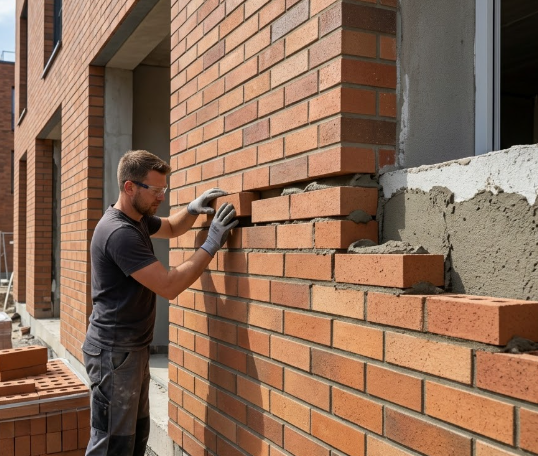
Table of Contents
1. Core Definition & Product Positioning of Exterior Wall Wet-Coated Masonry Brick
2. Global Overall Market Scale & Growth Forecast 2025–2033
3. Four Core Driving Factors Boosting Global Demand For Wet-Coated Masonry Brick 3.1 Rising Global New Construction Volume & Urbanization In Emerging Economies 3.2 Renovation & Retrofit Wave In Mature North American & European Markets 3.3 Strict Building Envelope Durability & Energy-Saving Code Standards 3.4 Cost Advantage Over Dry-Hung Cladding & Natural Stone Facades
4. Global Regional Demand Segmentation & Characteristic Differences
5. End-User Demand Split: Residential VS Commercial & Institutional Construction
6. Main Market Restraints That Suppress Wet-Coated Masonry Brick Demand
7. Lab Performance & Construction Cost Comparison: Wet-Coated Masonry Brick VS Common Exterior Cladding
8. Future Demand Growth Opportunities 2026–2033
9. Industry FAQ On Global Wet-Coated Masonry Brick Market Demand
1. Core Definition & Product Positioning of Exterior Wall Wet-Coated Masonry Brick
Exterior wall wet-coated masonry brick refers to decorative masonry brick fixed on building exterior walls through wet construction craft, with integrated anti-weather coating prefabricated on brick surface before delivery. Different from dry-hanging stone or fiber cement panels, wet-coated masonry brick adopts cement mortar bonding construction without pre-embedded metal keel frames. The integrated wet coating layer provides UV resistance, anti-carbonation, waterproof and anti-fouling performance for the masonry substrate. This product sits in the mid-range exterior wall cladding market segment, balancing decorative texture, long-term facade durability and construction cost control. It becomes a mainstream alternative for mid-rise residential buildings, community supporting commercial facilities, campus institutional buildings and low-rise industrial workshops worldwide.
2. Global Overall Market Scale & Growth Forecast 2025–2033
All statistical data extracts from verified global construction material third-party testing institutions and masonry coating market track reports. The global exterior wall wet-coated masonry brick market reached USD 18.67 billion in 2025, with a year-on-year growth rate of 6.2% compared with 2024. Market forecast data shows the total market value will break USD 19.84 billion in 2026, and expand to USD 25.13 billion by 2033, maintaining a compound annual growth rate (CAGR) of 6.1% throughout the forecast cycle. Wet-coated masonry brick accounts for roughly 10.2% of the total global facing brick market share in 2025; the proportion will climb to 12.7% by 2033 as weather-proof coating technology upgrades and construction labor cost changes reshape contractor preference.
3. Four Core Driving Factors Boosting Global Demand For Wet-Coated Masonry Brick
3.1 Rising Global New Construction Volume & Urbanization In Emerging Economies
Asia Pacific, Southeast Asia, Middle East and Africa push massive affordable housing and urban infrastructure projects. India’s construction market grew at 9.1% in 2025, while Saudi Vision 2030 launches large-scale new town and commercial complex construction plans. Local contractors prefer wet-coated masonry brick for mid-cost residential facades, as wet mortar installation matches local mature masonry construction labor systems, no special dry-hanging technical training required. High urban population inflow continuously releases rigid new building facade demand, forming stable basic market consumption volume.
3.2 Renovation & Retrofit Wave In Mature North American & European Markets
Europe and North America enter a stock building renewal cycle; renovation projects occupy over 62% of total construction spending in developed regions in 2025. A large number of old buildings built 20–30 years ago face facade aging, peeling paint and water seepage risks. Wet-coated masonry brick shortens overall renovation construction cycle, and integrated coating reduces later maintenance frequency, which meets property owners’ demand for low long-term maintenance cost facades. EU carbon neutrality codes also encourage replacing high-carbon solid clay brick with coated lightweight masonry variants, lifting product penetration in Western Europe.
3.3 Strict Building Envelope Durability & Energy-Saving Code Standards
Global countries release tighter exterior wall performance specifications, mandating facade materials to pass long-term UV aging, waterproof and thermal insulation tests. The prefabricated wet coating layer of masonry brick solves the defect that uncoated brick absorbs rainwater and causes wall hollowing, cracking and heat loss. ASTM and ISO building material test standards recognize coated masonry brick as qualified weather-resistant envelope material, pushing local governments and architectural design firms to increase specification usage rate in public construction bidding.
3.4 Cost Advantage Over Dry-Hung Cladding & Natural Stone Facades
Dry-hanging stone, aluminum composite panel and fiber cement cladding need keel, bracket and anti-rust hardware accessories, driving up total material plus installation cost by 35%–50% compared with wet-coated masonry brick. Wet construction only consumes conventional cement mortar without complicated metal auxiliary materials, cutting overall facade engineering investment significantly for mid-budget projects. For mass residential development, developers prioritize wet-coated masonry brick to control total construction expenditure without sacrificing exterior decorative effect.
4. Global Regional Demand Segmentation & Characteristic Differences
1. Asia Pacific (Largest Demand Region, 58.1% Global Market Share 2025) China, India, Vietnam and Indonesia form core consumption markets. China contributes 47.3% of global wet-coated masonry brick total output and consumption volume, massive new residential and industrial park construction supports steady demand growth. Southeast Asian coastal cities favor waterproof enhanced coated brick to resist high humidity and salt fog corrosion.
2. North America (Second Largest Market, 18.3% Share) Main demand comes from old residential community renovation and small-scale retail commercial buildings. Local contractors choose thin-type wet-coated masonry brick that matches American lightweight wall structure, demand CAGR maintains 4.8% 2025–2033, renovation demand accounts for 70% of regional consumption volume.
3. Europe (13.5% Share) Western Europe mainly purchases low-carbon eco wet-coated masonry brick that meets EU emission limits; Eastern Europe relies on cost advantages of imported coated brick for new affordable housing projects. Market growth rate is relatively mild at 4.2%, restricted by strict clay raw material mining regulations.
4. Middle East & Africa (Fastest Growing Segment, CAGR 8.7%) Saudi Arabia, UAE, Nigeria and Kenya carry out large-scale new city construction, arid high-temperature environment puts forward high UV resistance requirements for exterior walls, accelerating coated masonry brick replacement of ordinary uncoated brick. Most local production capacity is insufficient, relying on imported wet-coated masonry brick from Asia to fill market gap.
5. Latin America (10.1% Share) Demand concentrates on low-rise residential self-built housing and small municipal public buildings, price sensitivity is strong, mid-basic grade wet-coated masonry brick occupies more than 80% regional sales volume.
5. End-User Demand Split: Residential VS Commercial & Institutional Construction
表格
End-Use Segment | 2025 Global Consumption Share | Core Demand Characteristics |
Mid-Rise Residential Buildings | 46.7% | Large batch standardized specifications, cost priority, basic waterproof & UV coating formula |
Commercial Supporting Facilities | 29.2% | Custom color coating, anti-fouling enhanced formula, medium batch customized orders |
Institutional & Campus Buildings | 16.4% | Fire-retardant coated variants, long-term weather resistance certification required, public bidding centralized procurement |
Low-Rise Industrial Workshops | 7.7% | Anti-salt mist, anti-pollution heavy-duty coating, ultra-low cost basic grades |
Residential construction remains the core demand carrier, mass real estate development projects drive bulk standardized order volume. Institutional public buildings have high threshold for product certification and coating performance, with single order quantity smaller but higher unit product profit margin.
6. Main Market Restraints That Suppress Wet-Coated Masonry Brick Demand
1. Labor cost fluctuation in high-income regions: Wet construction relies on manual mortar pasting; rising mason worker hourly wages in Europe and North America narrow cost gap with dry-hanging lightweight panels, weakening product competitive advantage.
2. Raw material price volatility: Clay, acrylic coating resin and cement price periodic fluctuation affects factory production cost, causing unstable terminal sales price to restrain downstream contractor purchase willingness.
3. Competition from new lightweight exterior wall materials: EIFS thermal insulation integrated exterior wall, large-format ceramic cladding and recycled composite panels grab partial mid-range facade market share, diverting construction material procurement orders.
4. Technical limitation of wet craft in high-rise buildings: Most local building codes restrict full wet masonry brick construction for buildings above 10 floors, limiting product penetration in high-rise landmark commercial towers.
7. Lab Performance & Construction Cost Comparison: Wet-Coated Masonry Brick VS Common Exterior Cladding
Unified test standard: ISO 12572 weather resistance test; unified reference construction height: 6-floor mid-rise building facade
表格
Index Item | Wet-Coated Masonry Brick | Dry-Hanging Natural Stone | Fiber Cement Dry Cladding | EIFS Integrated Wall |
Total Material + Installation Cost Ratio | Baseline 1.0 | 1.48 | 1.32 | 0.95 |
500h UV Aging Color Difference ΔE | ≤1.8 | ≤1.2 | ≤2.3 | ≥3.6 |
Long-Term Waterproof Performance | Excellent | Good | Medium | Weak, prone to water seepage at splicing joints |
On-Site Construction Cycle Speed | Medium | Slow (keel installation) | Fast | Fast |
Post-Completion Annual Maintenance Cost | Low | Medium (rusted keel replacement) | Medium | High (surface coating repair) |
Wet-coated masonry brick balances comprehensive cost and weather resistance performance, forming obvious comprehensive advantages in mid-rise residential and small commercial building projects.
8. Future Demand Growth Opportunities 2026–2033
1. Eco low-carbon coating formula iteration: Water-based environmental wet coating replaces solvent-based coating, matching global green building certification standards, opening high-value green construction project market space.
2. Salt-fog resistant enhanced coating customized development: Coastal city and port industrial park construction demand releases, special anti-corrosion coated masonry brick forms new high-growth subdivision track.
3. Cross-border import demand expansion in MEA and Southeast Asia: Local production capacity shortage pushes continuous growth of Asia-manufactured wet-coated masonry brick export volume, overseas OEM & bulk export business expands rapidly.
4. Old building facade renovation standardized supporting solutions: Integrated coating + masonry brick matching renovation packages develop, capturing stock building renewal incremental demand in Europe and North America mature markets.
9. Industry FAQ On Global Wet-Coated Masonry Brick Market Demand
Q1: Which regional market holds the largest consumption demand of wet-coated masonry brick globally?
A1. Asia Pacific region accounts for 58.1% of total global market consumption share in 2025, China, India and Vietnam are three core demand support countries, driven by continuous large-scale urban new housing and infrastructure construction.
Q2: Why renovation projects become important incremental demand in European and North American markets?
A2. Over 60% construction investment in developed regions flows into stock building renewal projects. Wet-coated masonry brick shortens renovation construction period and cuts long-term facade maintenance expense, which fits local property management’s cost control requirements.
Q3: What main factors restrict wet-coated masonry brick from occupying high-rise building facade market?
A3. Multiple national building safety codes limit full wet mortar masonry brick installation on buildings over 10 floors, hidden risks of hollowing and brick falling under long-term wind load restrict product popularization in high-rise landmark commercial towers.
Q4: What type of downstream projects bring the largest bulk order demand for wet-coated masonry brick?
A4. Large-scale mid-rise residential real estate development projects generate the maximum standardized bulk procurement volume, contributing 46.7% of global total product consumption demand in 2025.